
Cendrine's Canneles
from June's cookbook club pick: The Kitchen Book by Ella Risbridger

From The Kitchen Book by Ella Risbridger
4th Estate, 21st May 2026, £26 / Photography by Yuki Sugiura
June’s cookbook club choice is The Kitchen Book by Ella Risbridger. She has generously shared with us three recipes from the book and this is one of those.
Head here to find out how to join in with the digital discussion group for the book
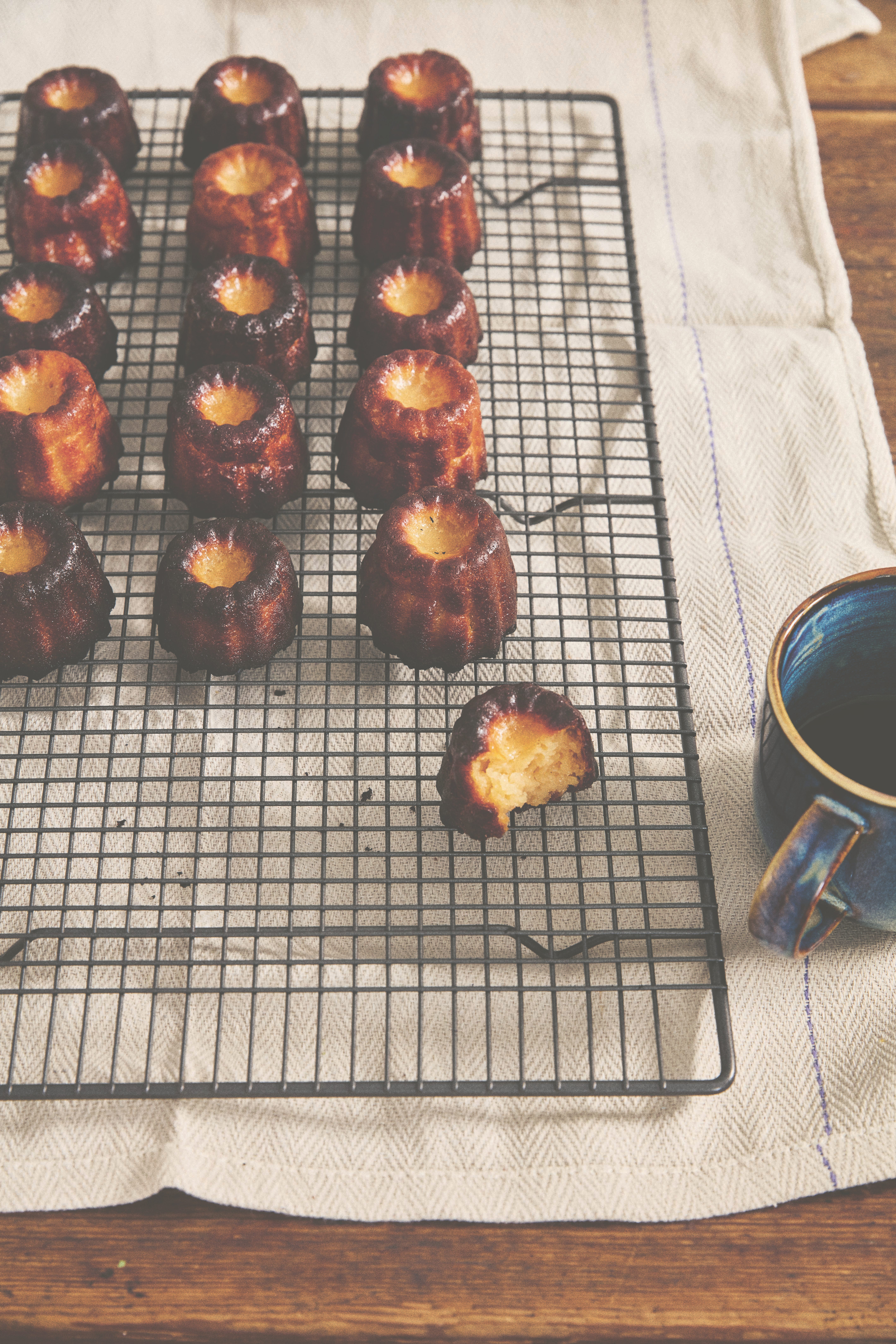
Cendrine’s Canneles
As Nigella to Henry James and mayonnaise, so me to cannele.
Cannele are those little dark brown, hyper-shiny, frilly-topped cakes you get in expensive cafes and patisseries. They have a crispy, chewy outside, and an inside best described as ‘squishy delicious honeycomb custard’. They are very sophisticated and elegant, etc., and are often the kind of restrained-lady option in a coffee shop. The recipes always say things like ‘worth the effort’ and ‘practice makes perfect’ and ‘complex’ and ‘traditional’ and this all, frankly, came as a deeply unwelcome surprise to me.
When I found this out I had been making and eating them for a year! I thought it was a normal and easy thing! I was an au pair in Paris withmy best friend and we would make the batter on a Friday; our boss would bake the canneles on a Saturday morning; they would eat them for breakfast; and then we would go off into the city, pockets full of still-warm canneles, hoping to fall in love or make some great art or at the veryleast get invited to a cool party. Mostly we just wound up eating canneles by the canal with a bottle of very cheap pink wine, inventing stories and drawing each other. It was probably better than any party to which we could have ever been invited, but that’s the kind of thing you onlyrealise in hindsight.
If we did get to a party, we could eat the cannele on the night bus back to the suburbs. Then we could eat any cannele still in the tin when we got home! Then we would make an enormous batch of cookies out of guilt for eating all the canneles, and as a kind ofl guess cultural exchange. Thecookies would be consumed through the week, and then it would be Friday again, and it would be cannele day.
Anyway, I came back to England and found out all this was not possible because canneles are a complex and traditional dessert that take much practice and effort. I read a lot of recipes and felt too small and humble to even try. One million chefs, one million beeswaxed copper moulds.
Then I had an idea, and Googled the recipe in French. Joy of joys: not a chef in sight. Instead, early-internet-type forums full of helpful and officious middle-aged housewives vying to write the shortest and easiest cannele possible. ‘Mix wet into dry, let rest, bake lh.’ This? This Icould do. I ordered a cannele mould off the internet - silicone, £10, dishwashable and easy release - and set to.
Unbelievable. Unbelievable! Crisp, chewy, shiny, glossy, a little sticky, flecked with vanilla and dense with custard and kept like a dream. Not, perhaps, as unimpeachably elegant and stiff-shelled as if I had dipped the copper into beeswax, but easy like Sunday morning. Or, perhaps, easy like Saturday morning.
This makes 16 - a neat 5x3 row on the rack, plus 1 for the cook.
50g butter + 20g extra for buttering
500ml whole milk
1 vanilla pod
2 tablespoons rum (optional)
1 egg + 2 egg yolks
250g caster sugar
120g plain flour
Melt the 50g butter (leave the 20g for now!) in a large saucepan. It needs to be big enough to also hold the milk and the eggs, so don’t skimp.
Whisk the milk into the melted butter and scrape in the seeds from the vanilla pod. Vanilla extract will also work here, which I accept thatyou are much more likely to already own. But a vanilla pod is so nice and complex, no? Tip in the rum, if using, and turn the heat down verylow. Simmer for 30 minutes until completely infused. Beat in the egg and yolks, and cook, whisking continuously, for 5 minutes.
Mix the sugar and plain flour together. Tip wet into dry, and stir to make a smooth batter: it’s basically just custard. Cover tightly with cling film and put in the fridge until the morning.
Pre-heat the oven to 240°C. It’s hot, I know! But worth it.
Melt the remaining butter (microwave ideal, otherwise sorry about making you wash up another pan) and coat the inside of your cannele moulds. Swirl gleefully. Put buttered cannele moulds into the fridge to chill while the oven comes up to temperature.
Batter into moulds, leaving space at the top for them to rise. Bake for 5 minutes at 240°c, then turn down to 210°c and cook for a further 40 minutes. Let cool for 15 minutes in the moulds, then turn out onto a cooling rack. You’re looking for a burnished, almost burnt top, and agolden-brown bottom. They will get more solid and more squidgy as they cool. They will, in fact, only get better with time.